Irish Language in Modern Life
The Irish language is a revitalised force - bridging the gap between our ancient heritage and contemporary life.
Anam an Náisiúin: The Soul of the Nation
The Irish language, or Gaeilge, is a living language enjoying a cultural revival. While its journey has been marked by periods of decline, today it is becoming an essential part of Ireland's identity, influencing everything from education and government to contemporary culture.
Its presence, though sometimes subtle, reflects a growing cultural pride and a renewed commitment to keeping the language alive.
Irish in Daily Life
The presence of Irish is seen across the island on a daily basis, marking public spaces and institutions.
Schools and Education
Irish is a mandatory subject in schools in the Republic of Ireland. A major part of the revival is the network of Gaelscoileanna (Irish-medium schools) and Gaelcholáistí (Irish-medium secondary schools), where the entire curriculum is taught as Gaeilge (in Irish). These schools, which often have waiting lists, are a testament to a growing desire among parents for their children to be fluent. Many schools now embrace a more conversational approach, encouraging students to use Irish naturally. Also, the tradition of teenagers attending Coláistí Samhraidh (Irish-language summer camps) in Gaeltacht (Irish-speaking) regions remains an integral part to full immersion of the language.
Street Signs and Public Life

In the Republic of Ireland, official signage is generally bilingual, featuring both Irish and English. In the Gaeltacht regions, signs are frequently exclusively in Irish. The visibility of Gaeilge extends to government and public bodies, which are mandated under the Official Languages Act 2003 to provide services and official documentation in Irish. This commitment ensures that the language has a role in governance and public administration, including correspondence, forms and recorded announcements.
From Garda Síochána on police cars to An Post on mailboxes, Irish stands proudly alongside English. Road signs, public transport notices and government buildings all bear Irish names, offering daily reminders of the nation’s linguistic heritage.
Media and Apps
The Irish language has a dedicated presence in modern media:
- Broadcasting: TG4 is the national Irish-language television broadcaster, offering a wide range of programming, from news and current affairs to drama, sport and entertainment. Raidió na Gaeltachta is the national Irish-language radio station. Raidió Rí-Rá is an Irish language chart music radio station founded in 2008.
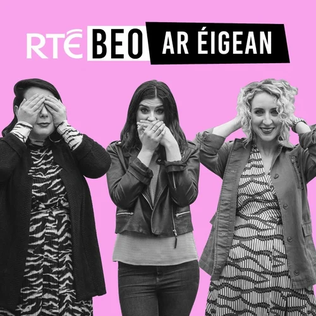
- Podcasts: Popular Irish-language podcasts include the chat show Beo ar Éigean and those focusing on learning and culture like Motherfoclóir.
- Digital Learning: Technology and apps for learning Gaeilge, such as Duolingo and specialised Irish-language resources, are increasingly popular, making the language accessible to a global audience.

Social media influencers and content creators are using TikTok and Instagram to share Irish words, phrases and humor with global audiences and resonating with the younger generation.
Irish in Music and Culture
The language is particularly flourishing in the cultural sphere, finding new expression in both traditional and modern forms.
Traditional and Modern Music
Far from being confined to classrooms or textbooks, the Irish language is finding a new lease of life in modern culture, particularly in both traditional and modern music. Across genres and generations, Irish is being reclaimed as a language of expression and belonging.
Gaeilge has long been embedded in traditional Irish music, with countless folk songs and ballads (amhráin traidisiúnta) sung in Irish. This tradition continues to thrive today. More recently, a new wave of artists have played a vital role in the revival of the Irish language by incorporating it into modern genres, giving it renewed visibility. Hip-hop and rap artists like Kneecap use Irish lyrics as a symbol of defiance and cultural identity, while internationally renowned artists like Hozier have incorporated themes and phrases in Irish.
.jpg)

By blending Irish with English and modern slang, Kneecap have successfully stripped away the "school subject" stigma of the language. For many young people, they represent a reclaimed optimism where speaking Irish is a celebration of identity.
Hozier engages with the Irish language in a different way, to evoke a sense of deep, ancestral place. A primary example is his track "De Selby (Part 1)", which features a hauntingly beautiful verse sung entirely in Irish. Lyrics such as "Scéith d’fhuil rith an tsaoil" (Your blood sheds the run of life) draw on the poetic nature of the language, connecting his modern alternative sound to the weight of Irish history and mythology.
Groups like Seo Linn have become synonymous with the modern Gaelic revival, famously blending traditional instruments with high-energy pop production. Their original tracks and viral covers, such as the traditional classic "Oró Sé do Bheatha 'Bhaile", demonstrated that Irish-language music could command millions of views and fill festival stages, proving its huge appeal to the younger generation.
Together, these artists show that Gaeilge can be both modern and meaningful, connecting young audiences to their roots in ways that feel fresh and relevant.
TV, Movies and Songs in Irish
Alongside TG4’s core output, Irish-language media has increasingly reached wider audiences, demonstrating that Gaeilge can make its impact across mainstream platforms and on the world stage.
- TV Shows: The long-running soap opera Ros na Rún remains a popular fixture on TG4, portraying everyday life entirely through the Gaeilge. More recently, shows such as the acclaimed teen drama Eipic and 2024’s murder mystery Crá have shown that Irish-language television can successfully adapt popular genres for modern audiences.
- Movies: Irish-language cinema has achieved international recognition in recent years. An Cailín Ciúin (The Quiet Girl), the first Irish-language film nominated for an Academy Award, achieved both critical acclaim and global distribution, proving that stories told through Irish can resonate far beyond Ireland.
- Songs: Contemporary Irish-language songs are now often heard on national radio and at major music festivals. Artists such as Kneecap, Seo Linn and IMLÉ blend Gaeilge with modern musical styles, normalising the language in spaces traditionally dominated by English.

Why it matters:
Together, these developments show that Irish is no longer confined to cultural preservation alone. Through television, film and music, Gaeilge is being re-established as a living, creative language - visible, relevant and accessible.
Importance in the State and Tourism
Government and National Identity
As an official language of the Republic of Ireland and a working language of the European Union, Irish holds a unique constitutional and political status. Its presence in legislation, public signage, education and state ceremonies reinforces its role as a symbol of sovereignty. Gaeilge serves as a link between modern Ireland and its ancient past, reflecting centuries of struggle for freedom.
Irish is increasingly visible in everyday public life - from bilingual road signs and government documents to its use in the Oireachtas and public broadcasting.
Tourism and Cultural Experience
For visitors, Gaeilge forms an essential part of the authentic Irish experience. The Gaeltacht regions - the heartlands of Irish-speaking culture - are major draws for visitors. Visitors are often encouraged to learn a few words, a cúpla focal, to engage more deeply with locals to experience Irish as a living, spoken language embedded in daily life, music, storytelling and local tradition.
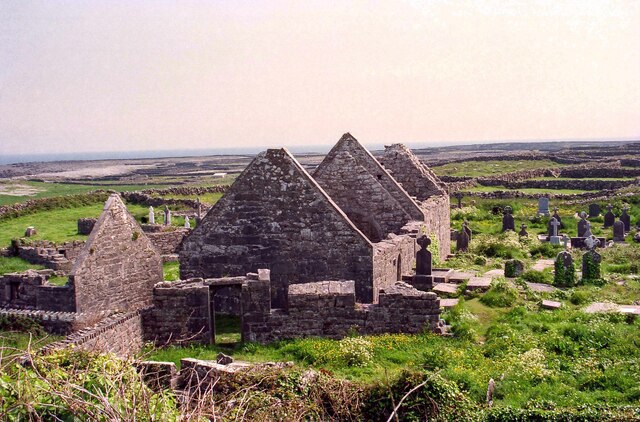
The Aran Islands, in particular, have gained renewed attention in recent years as a symbol of linguistic and cultural preservation. They cast you back in time with their dramatic landscapes, strong Irish-speaking communities and traditions. Their global visibility through film, literature and social media have made them a focal point for both domestic and international tourism.


Gaeltacht summer colleges, cultural festivals and immersive language experiences have also seen a resurgence, especially among younger visitors seeking deeper cultural connection rather than passive sightseeing.
The Future of Gaeilge
The future of An Ghaeilge looks bright. While challenges remain, the enthusiasm of young speakers, educators and creators suggests a cultural shift toward pride rather than obligation. The Irish language is no longer just a relic of history - it is the voice of Ireland’s future.
We encourage all visitors and Irish people to engage with the Irish language. Learn a few simple phrases, such as go raibh maith agat (thank you) or sláinte (cheers/health), and use them in your day to day life or explore the wealth of Irish-language media. By engaging with the language, you are connecting with the true sense of what it means to be Irish.
As former President Michael D. Higgins once said, “The Irish language is not a symbol of the past, but a vital expression of our present and future.”. Every fáilte, every slán and every song sung in Irish adds to that living tradition.
So, whether you’re walking through Dublin, tuning into TG4 or streaming a song in Gaeilge, take a moment to listen. Learn a few words, share a phrase or simply enjoy the sound of Ireland.
Go n-éirí an bóthar leat - may the road rise to meet you.
