The Irish Language
Learn about the Irish language, its rich history and how it continues to thrive today.
Quick Facts About Irish
- 1.8 million speakers
- 73,000 daily speakers in Gaeltacht areas
- One of the oldest written languages in Europe, dating to the 4th century
- Only 18 letters in the alphabet
Common Words & Phrases
| English | Gaeilge |
|---|---|
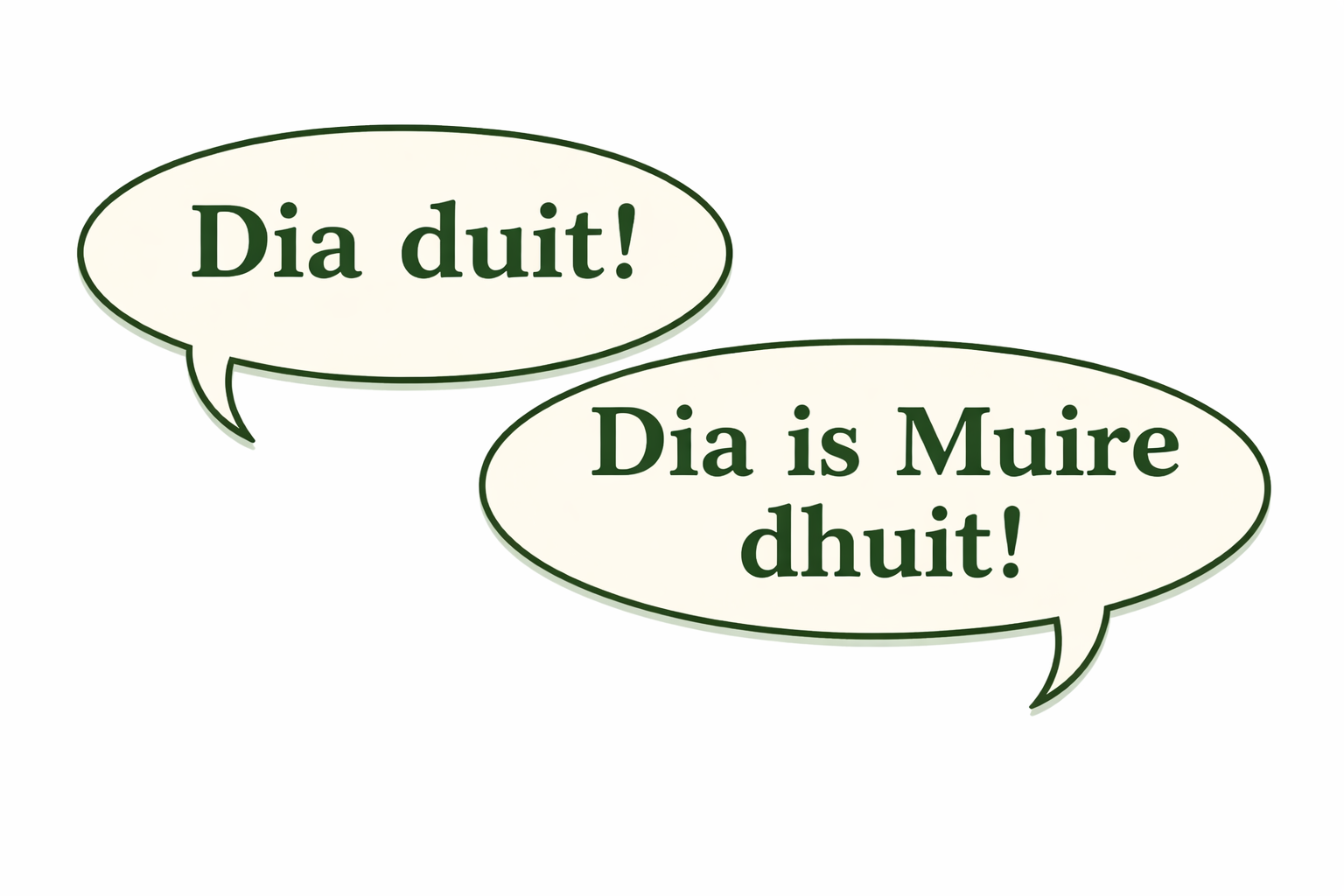
| Hello | Dia duit |
| What is your name? | Cád is ainm duit? |
| How are you? | Conas atá tú? |
| Please | Le do thoil |
| Thank you | Go raibh maith agat |
| Ireland | Éire |
| Cheers | Sláinte |
| Goodbye | Slán |
Resources for Learners
A wealth of resources is available for those wishing to learn Irish, from online courses to in-person classes and immersion programs.
- Duolingo, Memrise, futurelearn.com
- Local Irish language classes (e.g. Conradh na Gaeilge)
- Gaeltacht summer colleges
- TG4 (Irish language TV channel), Raidió na Gaeltachta
The Irish Alphabet
There are only 18 letters in the traditional Irish language. However, the letters J, K, Q, V, W, X, Y, Z are used in modern Irish for foreign words and names. Irish uses accent marks, called fadas (meaning long), which change a vowel's sound to a longer sound.
For example:
á pronounced "aw"
é pronounced "ey"
í pronounced "ee"
ó pronounced "oh"
ú pronounced "oo"
History of the Irish Language
Dive into the fascinating story of Gaeilge (Irish), the official language of Ireland, a vibrant language that has echoed through Celtic history. From its ancient origins to its modern resurgence, the journey of the language is a testament to cultural resilience. As you explore this section, you will learn about:
- Origins & Celtic Roots
- Medieval Ireland
- Decline & Suppression
- Revival & Modern Era
Irish in Modern Life
While challenges remain, there's a growing resurgence of interest in Irish, particularly among younger generations and those abroad seeking to connect with their heritage. Government initiatives and community efforts continue to support its growth.
.jpg)
- Increased government funding
- Growing interest from younger generations
- Digital platforms and media
- Strong community support
Phrase of the Day
Pronounced:
Gaeltacht Regions

A map of Ireland showing Gaeltacht areas.
Where Gaeilge Lives Today
The Irish language is primarily spoken in designated Gaeltacht regions along the west coast of Ireland. These areas preserve a vibrant, living culture of Gaeilge, though the language is taught and recognised nationwide.
- Official language of the Republic of Ireland
- Recognised minority language in Northern Ireland
- European Union official language
Why Learn Irish?
Learning Irish connects you directly to the heart of Ireland's cultural heritage. It's a key to understanding traditional music, literature and the unique identity of the Irish people.
- Cultural connection and identity
- Access to rich literary traditions
- Brain training and cognitive benefits
- Connect with native speakers